Why Thailand Remains a Top Jewelry Manufacturing Hub
Dec 15, 2025
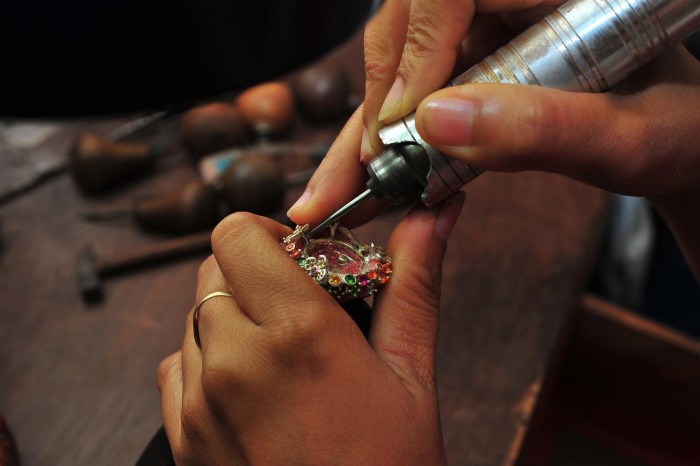
If you talk to senior sourcing or production leaders in the jewelry industry, Thailand comes up again and again. Not as a trend, but as a constant. Behind that reputation is a manufacturing ecosystem built over centuries, and refined over decades to serve international brands managing production remotely.
A jewelry manufacturing heritage built on gemstones
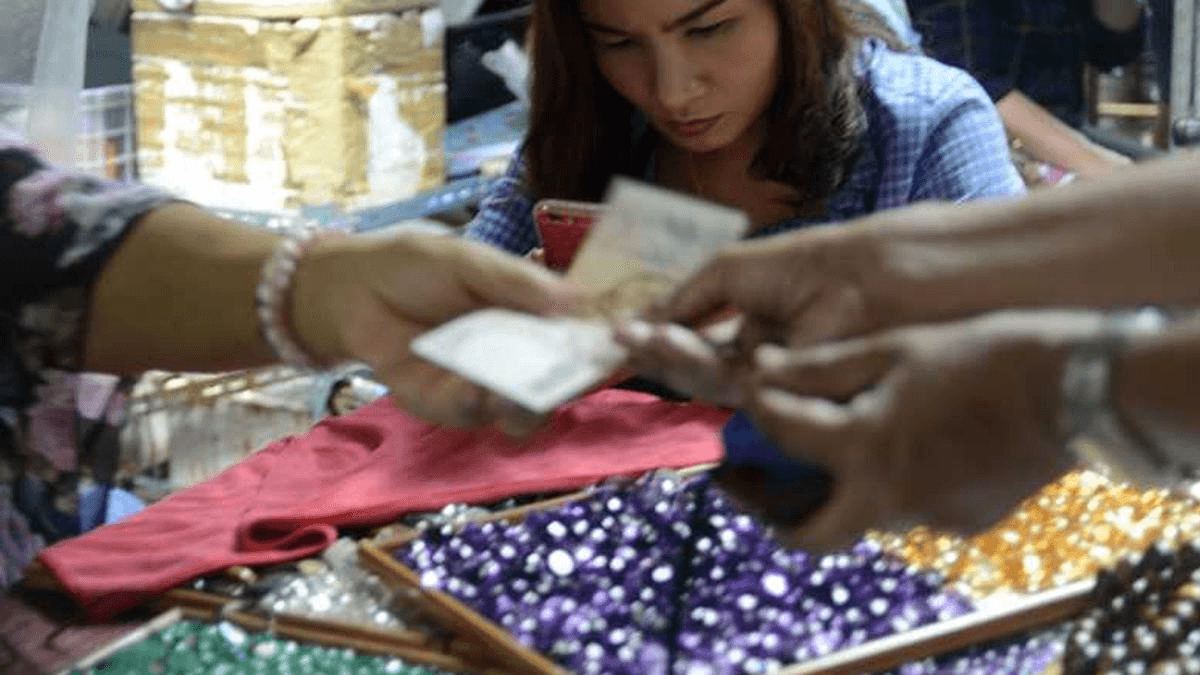
Thailand’s role as a global jewelry production hub started with gemstones. For centuries, regions like Chanthaburi and Trat have been international trading centers for colored stones, attracting merchants from across Asia, the Middle East, and Europe. Chanthaburi, in particular, remains one of the world’s most important hubs for gemstone cutting, treatment, and trading today. The province at a few hours-drive east of Bangkok is still home to one of the world's oldest gemstone markets, Talad Ploy.
This early focus on gemstones shaped Thailand’s core strength: technical craftsmanship. Skills in stone cutting, setting, polishing, and finishing were developed long before large-scale manufacturing existed. When global brands began sourcing jewelry from Thailand in the late 20th century, those artisanal capabilities scaled into factory environments rather than disappearing.
The combination of hand skills embedded into industrial production is still one of Thailand’s biggest differentiators.
Thailand’s jewelry industry by the numbers
Today, Thailand is one of the world’s most important jewelry exporters. From January to August 2025, gem and jewelry exports surged to approximately USD 17.7 billion, a 70% increase year-on-year, driven by strong international demand and Thailand’s export-ready supply chain (source: GIT Information Center Thailand).
Thailand is home to hundreds of jewelry factories, ranging from specialist workshops to large, vertically integrated manufacturers serving U.S., European, and Australian brands. The industry employs hundreds of thousands of workers across cutting, setting, casting, finishing, quality control, logistics, and export operations.
This scale matters. It means brands are not relying on a fragile or experimental supply base, but on an industry designed to handle complexity, volume fluctuations, and international standards.
What Thailand produces best
Thailand’s strength is not ultra-low-cost mass production. Instead, it excels in categories where quality control, handwork, and consistency matter:
Sterling silver and gold jewelry
Gem-set pieces, especially colored stones
Small-to-mid volume production with repeatability
Complex finishing and mixed hand/machine processes
Just as important is the surrounding ecosystem: gemstone markets, assay labs, casting houses, plating specialists, logistics providers, and export documentation experts. Many brands can manage most of their supply chain within Thailand alone, which provides a major advantage when producing remotely.
Thailand vs. India and China
India and China remain global giants, but their roles differ. India dominates diamond cutting and large-scale gold manufacturing, but its exports are highly sensitive to global demand cycles. In 2024/25, India’s polished diamond exports fell to their lowest level in nearly 20 years. China has massive manufacturing capacity but is increasingly influenced by domestic economic conditions and shifting consumer demand for gold jewelry.
Thailand sits between these models. It offers scale without losing craftsmanship, and flexibility without sacrificing process discipline. That balance has made it particularly attractive to premium and luxury brands managing production from overseas teams.
Why this matters for remote jewelry production
For brands overseeing jewelry production remotely, Thailand’s maturity is a critical advantage. Factory managers are accustomed to working with international clients, documentation standards are well understood, and quality expectations are broadly aligned with Western markets.
At the same time, the depth and size of the industry introduce complexity: multiple suppliers, layered decision-making, language barriers and cultural nuances require active, on-the-ground coordination. This is why many global brands rely on local production and quality managers rather than managing factories directly from headquarters.
Thailand is a strategic manufacturing hub built for international brands, provided it’s managed with the right structure, local presence, and cultural understanding. With more than 25 years working across factory floors and brand headquarters, my small team and I help jewelry brands translate their standards into day-to-day factory execution, ensuring quality, timelines, and communication stay aligned even when teams are based overseas.
If you’re producing in Thailand — or considering it — and want reliable, on-the-ground support you can trust, I’m always happy to have a conversation.